Why Images Make Onboarding So Much Easier
In short
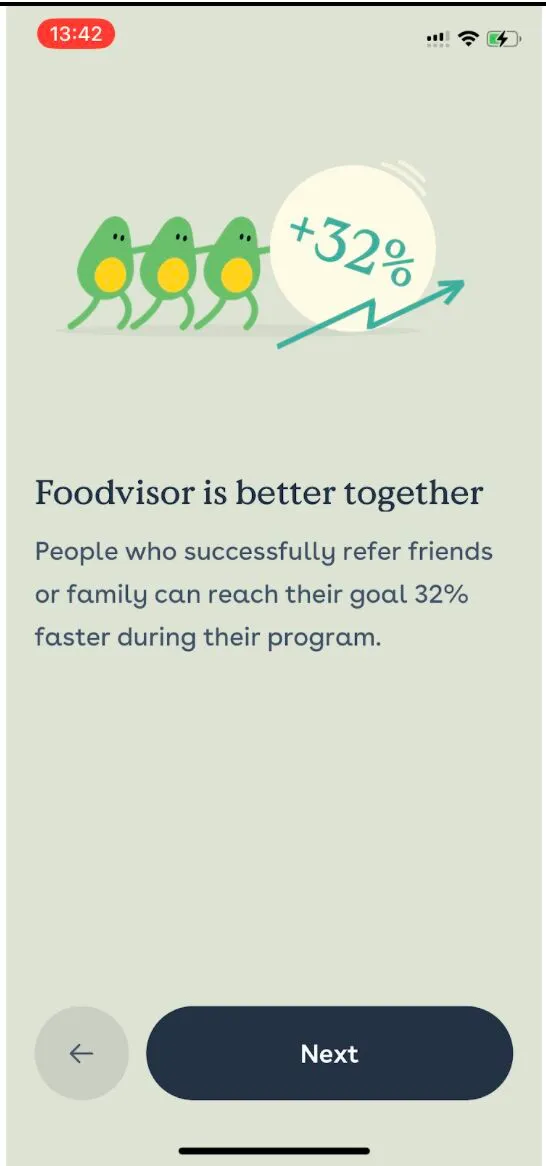
Images make onboarding easier because the brain guesses what comes next from the first thing it sees, then checks that guess against the text. Avocados moving together suggest teamwork, and the line about referring friends to reach a goal 32% faster confirms it. The visual also helps the fact stick, as long as it supports the message.
Have you ever wondered why visuals are so powerful during onboarding 🧐?
Let's keep it simple.
1. First Impressions Matter
When you start reading, your brain makes quick guesses about what's coming next.
If you see an image of avocados moving together, you instantly think about teamwork or collaboration.
2. Connecting the Dots
As you read more, you confirm if your guess was right.
Reading "Refer friends and reach your goal 32% faster" alongside the moving avocados helps you realize that bringing friends along speeds up your progress.
3. Making It Stick
Images help new information sink in.
Even if you didn't expect that inviting friends boosts your progress by 32%, the visual makes it easier to understand and remember this fact.
A Word of Caution
But be careful—using the wrong image can backfire. An unrelated or confusing picture might mislead or distract users, making onboarding harder. Always choose visuals that clearly support your message to enhance understanding, not hinder it.
Key takeaways
- The brain makes quick guesses about what is coming next, and an image sets that first impression.
- Reading the text confirms or corrects the guess, so the image and the copy should tell the same story.
- A matching visual helps new information sink in, even a fact users did not expect, like reaching a goal 32% faster.
- An unrelated or confusing image can mislead or distract users: choose visuals that clearly support the message.