The Word “Personalization” Doesn’t Sell — Real Personalization Boosts Conversion
In short
Real personalization shows each user information that makes satisfying their specific need more likely, while irrelevant content only adds cognitive load. Promising to tailor the experience is not enough: after asking about goals, confirm the app works for the chosen goal, branch the flow by goal, use matching testimonials and put the user’s goal on the paywall.
We live slightly in the past - visual and auditory signals reach the brain with a small delay.
- To compensate for this delay, the brain tries to predict the likelihood of satisfying a need in the current context.
From this follows:
- A user with a SPECIFIC need should see information that predictively increases the likelihood of satisfying it.
- Irrelevant information increases cognitive load and reduces the likelihood of need satisfaction.
🧍 Imagine walking through a mall and seeing a store window displaying shoes, and you happen to need boots!
You open the door to the store and see bicycles inside.
What would you do 😒❓
🤓 I've seen dozens of onboardings and paywalls trying to sell the word 'personalization' to the user, instead of making the user experience truly individual.
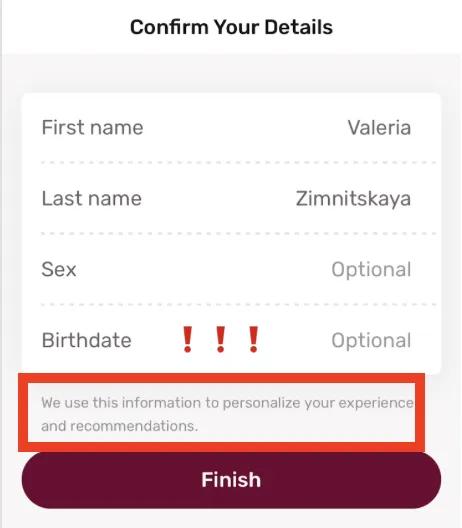
❗️ Instead of introducing themselves, asking how to address the user, and expressing happiness to meet, someone forces the user to enter their name (claiming that 'This helps us tailor your experience and suggestions.' - Zero app).
Asking the user about THEIR goals:
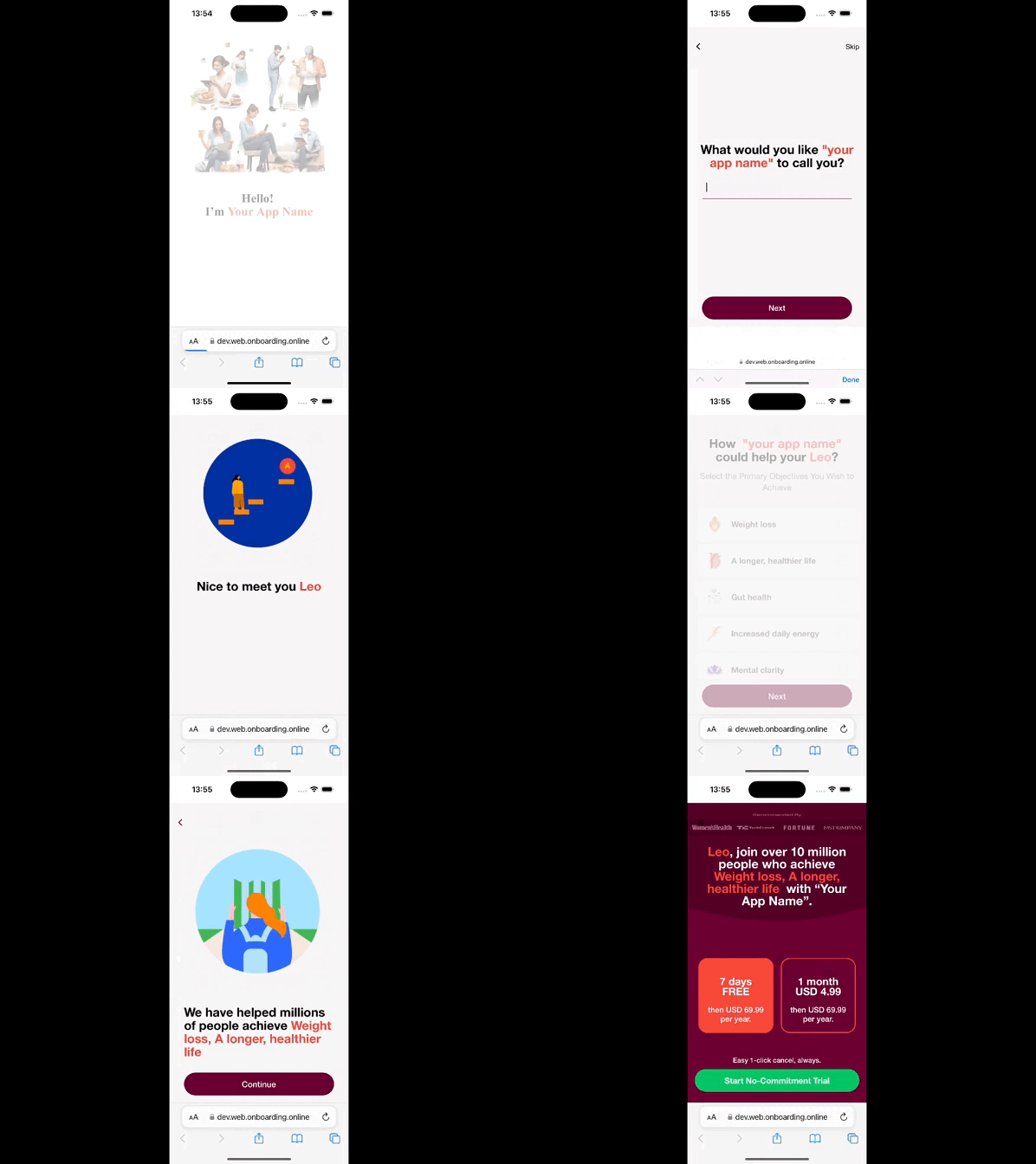
- They forget to confirm that the app works especially well with the goals CHOSEN by the USER.
- They don’t build a separate onboarding flow for different goals.
- They don’t use testimonials that correspond specifically to the user’s goals.
- They don’t use personal addresses and the user’s goals on the paywalls (after all, it’s precisely what the user wants to achieve, not 'Premium Access').
🔥 We designed our service to create onboardings that provide an individual experience to each user, without you having to spend a ton of resources on development and testing.
Key takeaways
- The brain predicts whether a need can be satisfied in the current context, so a user with a specific need should see information that makes satisfying it more likely.
- Irrelevant information increases cognitive load and reduces the likelihood that the user’s need is satisfied.
- Forcing users to enter their name “to tailor the experience” sells the word personalization instead of an individual experience.
- After asking about goals, confirm the app works especially well for the chosen goal and build separate onboarding flows for different goals.
- Use testimonials that match the user’s goal, and address the user by name and goal on the paywall instead of selling “Premium Access”.