Negative Emotions → Procrastination → Drop-off Instead of Purchase
In short
Negative emotions weigh more than positive ones, and the brain hates uncertainty, so anxious users delay action and drop off instead of buying. Reduce uncertainty in onboarding: confirm users are in the right place, show what lies ahead, address past failures and reflect their context. Then ease purchase anxiety with low-price starts, refunds, trials or price choice.
- 💡 Negative emotions impact us more than positive ones.
- 💡 It’s an evolutionary trait — better to avoid a tiger than to risk finding a bit of food.
Anxiety leads to procrastination👇:
🧠 The limbic system of the brain says, "Don’t do anything unless you're SURE it’s SAFE."
Don’t act until ready → Delaying actions🤔.
💡 And let’s not forget: our brain HATES uncertainty.
Reduce uncertainty during onboarding:
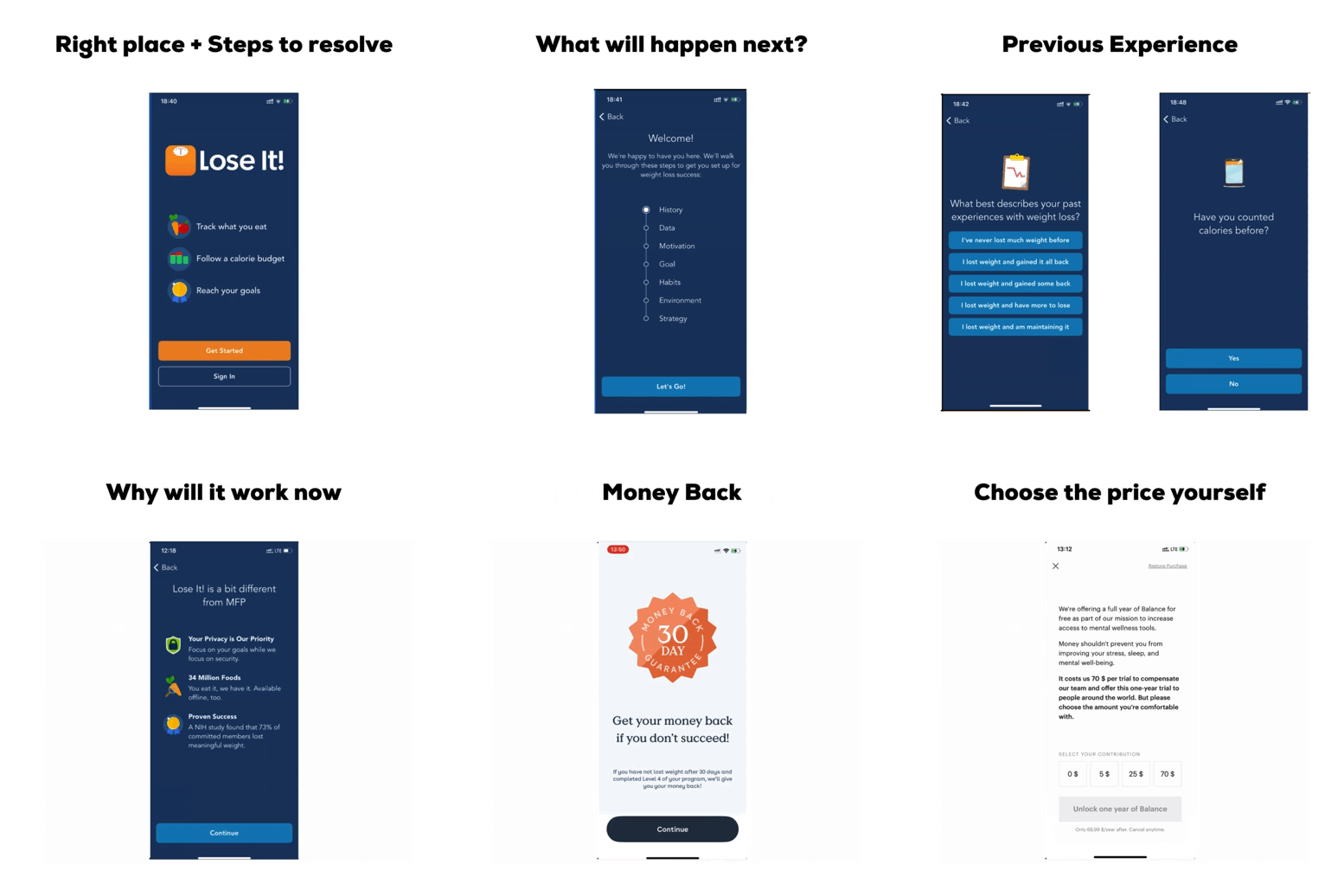
1. Show that the person is in the right place (they’ll get what was promised in ads and on the App Store page).
2. Show what lies ahead (what steps the journey consists of and how the need will be met).
3. Address fears, especially if the person has already tried to solve the problem and failed.
4. Show that your product takes the user’s specific context into account ("Oh, this is exactly my situation—these folks are experts!")
🤓 P.S. A purchase is also a decision that causes anxiety by itself—reduce that anxiety:
- 1. Offer a short period at a low price 💸
- 2. Offer a full refund or trial 🔄
- 3. Compare the purchase to something insignificant —"It’s just a couple of cups of coffee, what's there to worry about? ☕☕"
- 4. Let the user choose their own price 💡
Key takeaways
- Negative emotions affect us more than positive ones, an evolutionary trait that favors avoiding risk.
- Anxiety leads to procrastination: the brain delays action until it is sure that acting is safe.
- Reduce uncertainty by showing users they are in the right place and what steps the journey consists of.
- Address fears from past failed attempts and show that the product takes the user’s specific context into account.
- A purchase causes anxiety too: offer a short low-price period, a refund or trial, a small everyday comparison, or let users choose the price.